This page will cover three different types of food grade plastics you are likely to come across in your plastic bucket journeys. There are other food grade plastics such as PET, PCP and the increasingly unpopular BPA not covered here, but they are usually not used to make buckets.
HDPE or High Density Poly Ethelene plastic has an amazing temperature range, and is considered safe for short periods up to 248°F (120°C) or for long periods up to 230°F (110°C.) Since boiling water never gets above 100°C, this means that anything boiling and below is safe for a food grade bucket.
It’s important to make sure the bucket you are storing hot liquids in is HDPE however, as a similar plastic, low density polyethelene, actually has a temperature limit of 176°F (80°C) which is well below boiling. To see which type of plastic you are working with, just check the small recycling symbol usually found on the bottom of the bucket. HDPE is the one you want to see!
Sometimes I find a polypropelene or PP plastic bucket used for food, usually smaller containers that are thinner and less rigid than standard five gallon buckets. Polypropene has the highest temperature rating of all, but is considered a low to moderate health hazard by the Environmental Working Group.
 High Density Polyethelyne
- 230°F temperature limit
- Usually food grade
- Recycle symbol 2
- Example: Most five gallon buckets
 Low Density Polyethelyne
- 176°F temperature limit
- Usually food grade
- Recycle symbol 4
- Example: 18 gallon rubbermaid totes
 Polypropelene
- 275°F temperature limit
- Usually food grade
- Recycle symbol 5
- Can release a mild or moderate toxin
- Example: Yogurt containers

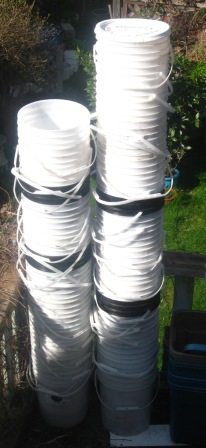 Obviously the best way to store a bunch of 5 gallon buckets is to stack them neatly into bucket skyscrapers, like I’ve done here. I often build stacks of 10 or more buckets at a time.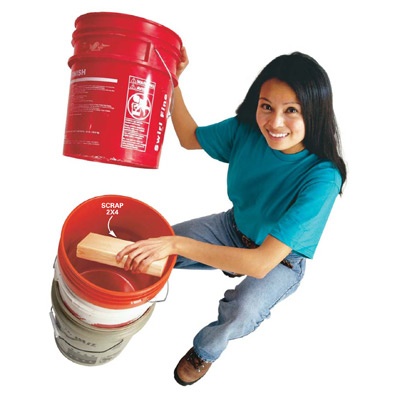


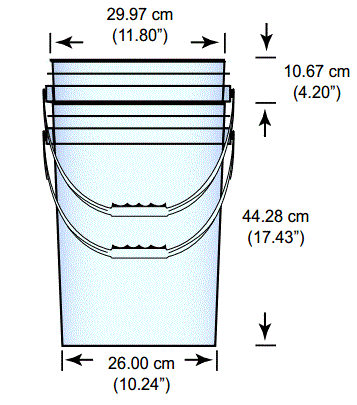 The most common questions I get asked about 5 gallon buckets are regarding their dimensions. I’m hesitant to answer questions on the dimensions of a 5 gallon bucket because it will vary between models, sometimes significantly.